 English (United Kingdom)
 Arabic (اللغة العربية)
 Persian (Iran)

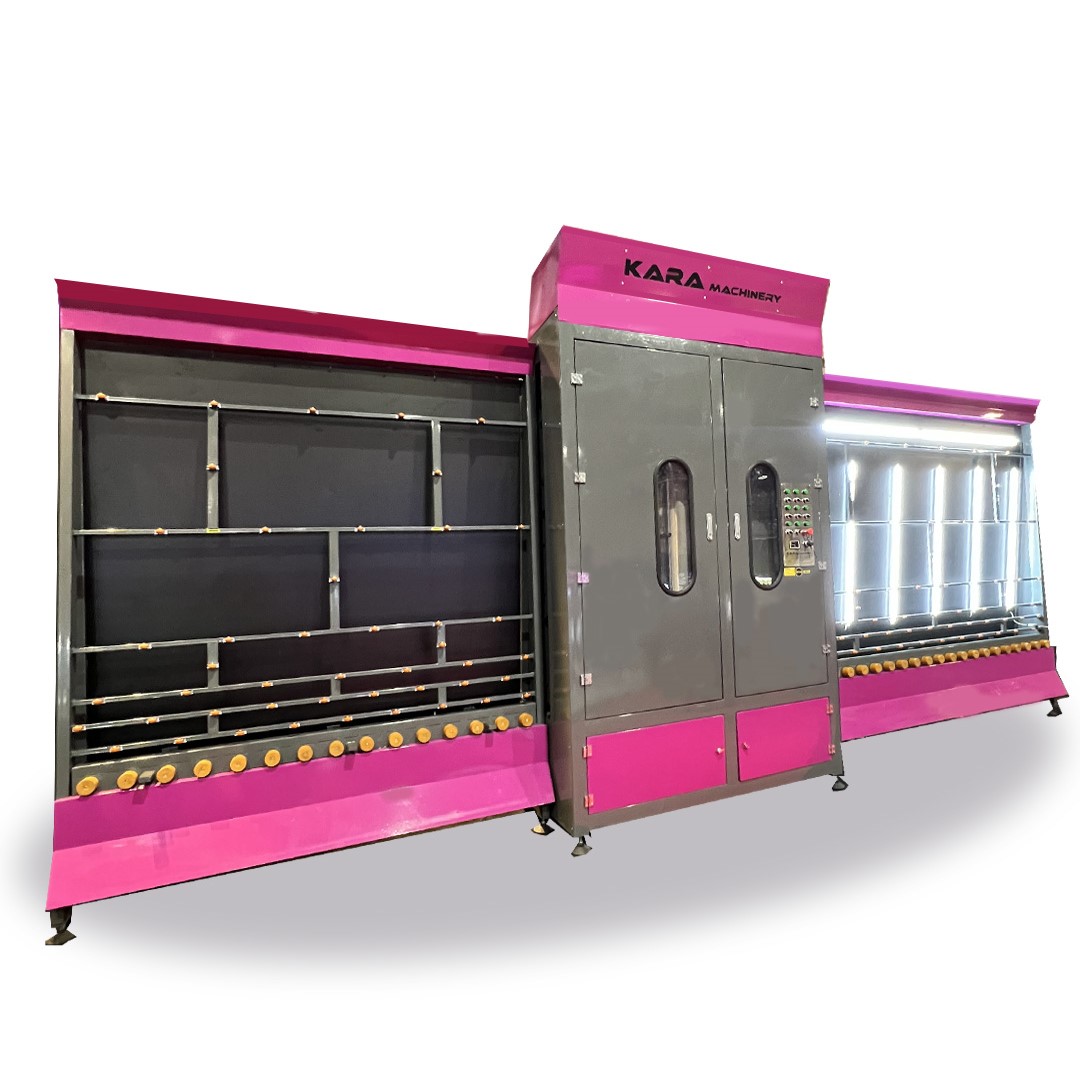
One of the most essential stages in double-glazed glass production is washing the glass with dedicated industrial equipment, including vertical glass washing machines.
Even the smallest stain on the inner glass surface cannot be reached and cleaned after the double-glazed window manufacturing process is complete, reducing the quality of the finished product.
The vertical glass washing machine, available in heights of 1800, 2000 and 2200 mm, is one of the most efficient machines for this purpose.
Double- or multi-glazed glass consists of two or more panes arranged parallel to one another at equal distances and separated by a spacer.
The space between the panes contains air or an inert gas, such as argon or krypton, at a pressure approximately equal to outside atmospheric pressure. This cavity provides the insulating properties of double-glazed glass.
Aluminium spacers are commonly used in double-glazed units, with their cavities filled with silica gel or another desiccant.
This material absorbs moisture from the air between the panes, while suitable sealants provide a complete airtight seal.
Spacers are commonly available in thicknesses of 6, 8, 10, 12, 14 and 16 mm.
Depending on requirements, double-glazed windows can use clear, tinted, reflective, laminated or tempered glass.
In 1865, a glass shop owner in New York City obtained a patent and the rights to use double-glazed glass in the United States.
Through research and experiments, he demonstrated that double glazing could help prevent indoor heat from escaping in cold weather and improve protection of the indoor environment.
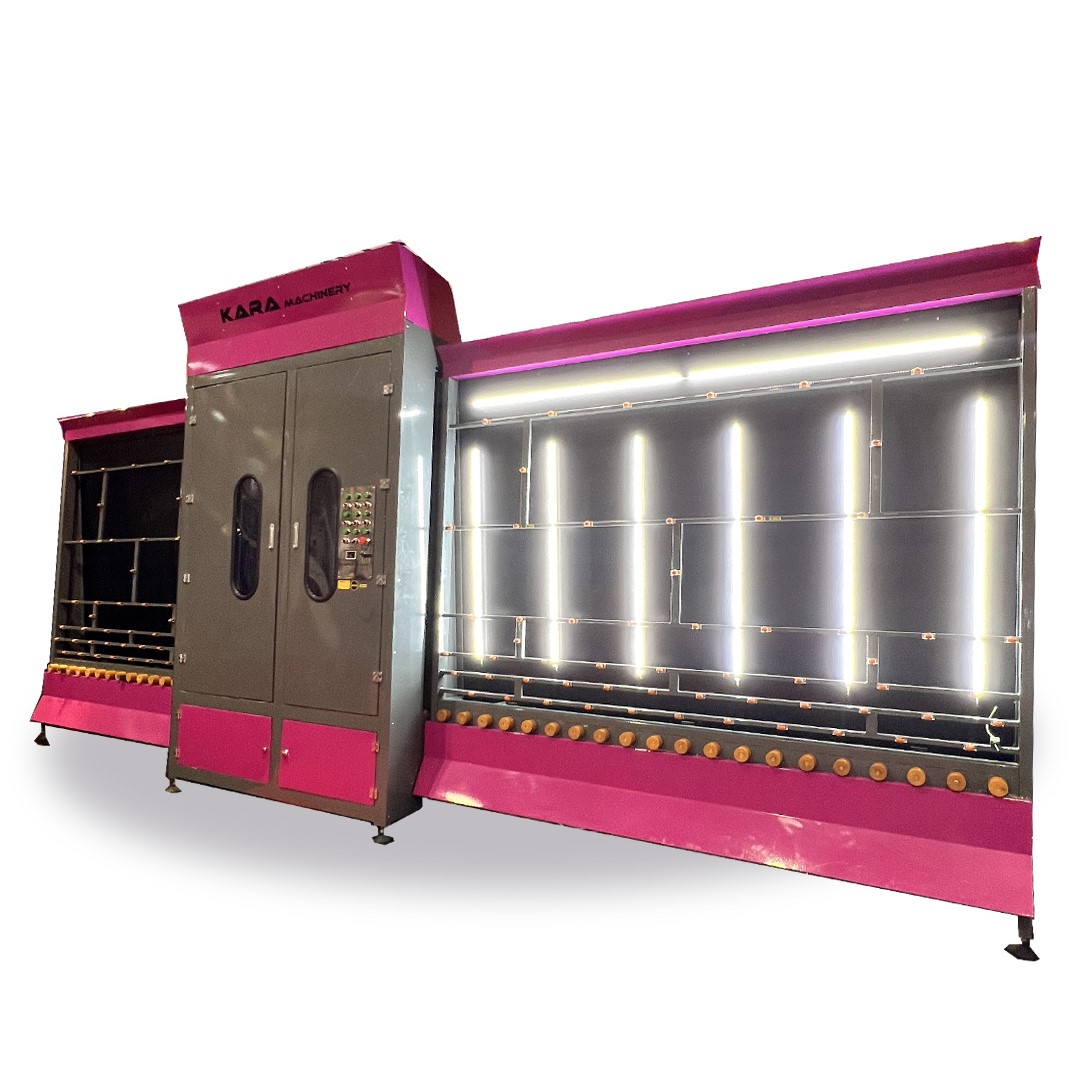
Have you ever wondered how glass is cleaned during double-glazed unit production so that the finished product reaches the customer completely clean and free of stains?
The key machine in this process is the industrial glass washing machine, available in horizontal and vertical models.
Its advantages include high operating speed, ease of use, improved product quality, competitive pricing, and easy replacement of components and spare parts.
کارشناس فروش
Sorry, I'm offline at the moment. I'll be back online in the next 5 hours 8 minutes
17:00Sales Specialist
Sorry, I'm offline at the moment. I'll be back online in the next 5 hours 8 minutes
17:00